WHAT I HAVE DONE
Sometimes you know you are in a loop — and you still have to keep going until it shows you why.
The work began from zero — with nicotine — and expanded step by step across more than thirteen scientific disciplines, including biology, chemistry, medicine, metabolism, and historical sources. To work directly with primary material, I developed the technical language required for each field, including medical Greek, rather than relying on summaries or secondary interpretation.
The first volume of the trilogy represents a phase of collection and filtration.
During this period, I worked without artificial intelligence, reading, re-reading, and cross-checking sources repeatedly. Information was narrowed through continuous elimination, retaining only what could remain consistent across disciplines without internal contradiction. Where possible, physiological observation and blood tests were used as verification tools. Supporting laboratory information is provided in the laboratory section.
Alongside the research, I closely observed how common stimulants such as nicotine, cannabis and caffeine alter perception, focus, and cognitive patterning — not to promote their use, but to understand how chemical stimulation reshapes attention, interpretation, and biological timing. This dual position — reader and biological observer — made it possible to examine not only information itself, but how the human nervous system processes information under stimulation.
Through this process, explanations that failed when tested against physiology, metabolism, or timing were systematically removed.
The second volume marks a transition.
Here, the accumulated material condenses into clearer structures, more direct questions, and fewer assumptions. What remains is not a collection of theories, but a reduced framework capable of explaining addiction and stimulation as disruptions of biological timing, rather than as psychological, moral, or behavioral failures.
The third volume emerged as a consequence of this reduction process.
As explanations were stripped down to their minimal form, conventional narrative language became insufficient. What remained could no longer be expressed through extended argument or theory, but only through compressed signals, structural markers, and timing-based cues. The third volume therefore does not expand the framework; it records what is left once reduction is complete — a biological becoming written in signal form, intended to be read as direct signal than explanation.
This work does not claim novelty through invention.It arrives at a moment of civilizational overstimulation, when the question is no longer what works faster, but what still works at all.
The trilogy was developed through a method I define as biological constraint–based integrative reduction:
A disciplined elimination of explanations across disciplines, where physiology, metabolism, and timing serve as the final filters, and where the investigator accounts for how cognition itself is altered during the process.
This is the filter that shaped the work — and it allows very little to remain.
On Resolution of Sacred Energy in Addiction
Dormant People is a long-standing project, developed over time with consideration for personal, familial, and broader community implications.
This work develops from twelve years of engagement with unresolved questions in addiction research. Limitations in prevailing biochemical and structural models prompted an independent line of inquiry.
Dormant People examines these questions through an independent investigation spanning thirteen disciplinary domains, including biochemistry, biological geometry, and origin-of-life research.
At its origin was a personal question that could not be dismissed: why chemical stimulation became necessary, how dependence formed, and what biological conditions made it possible.
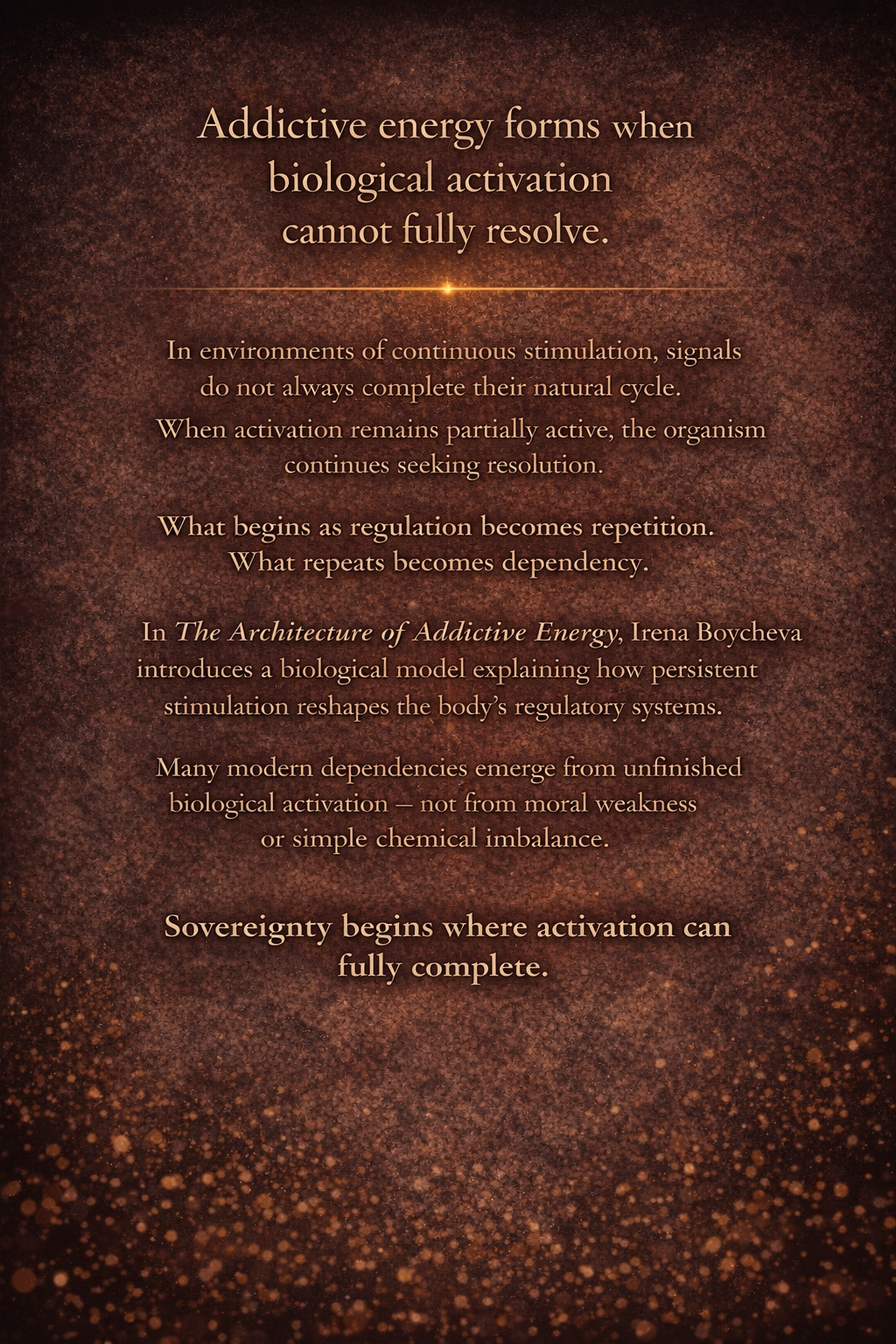
Addiction is not excess desire — it is a loss of receptivity.
Read a glimpse below
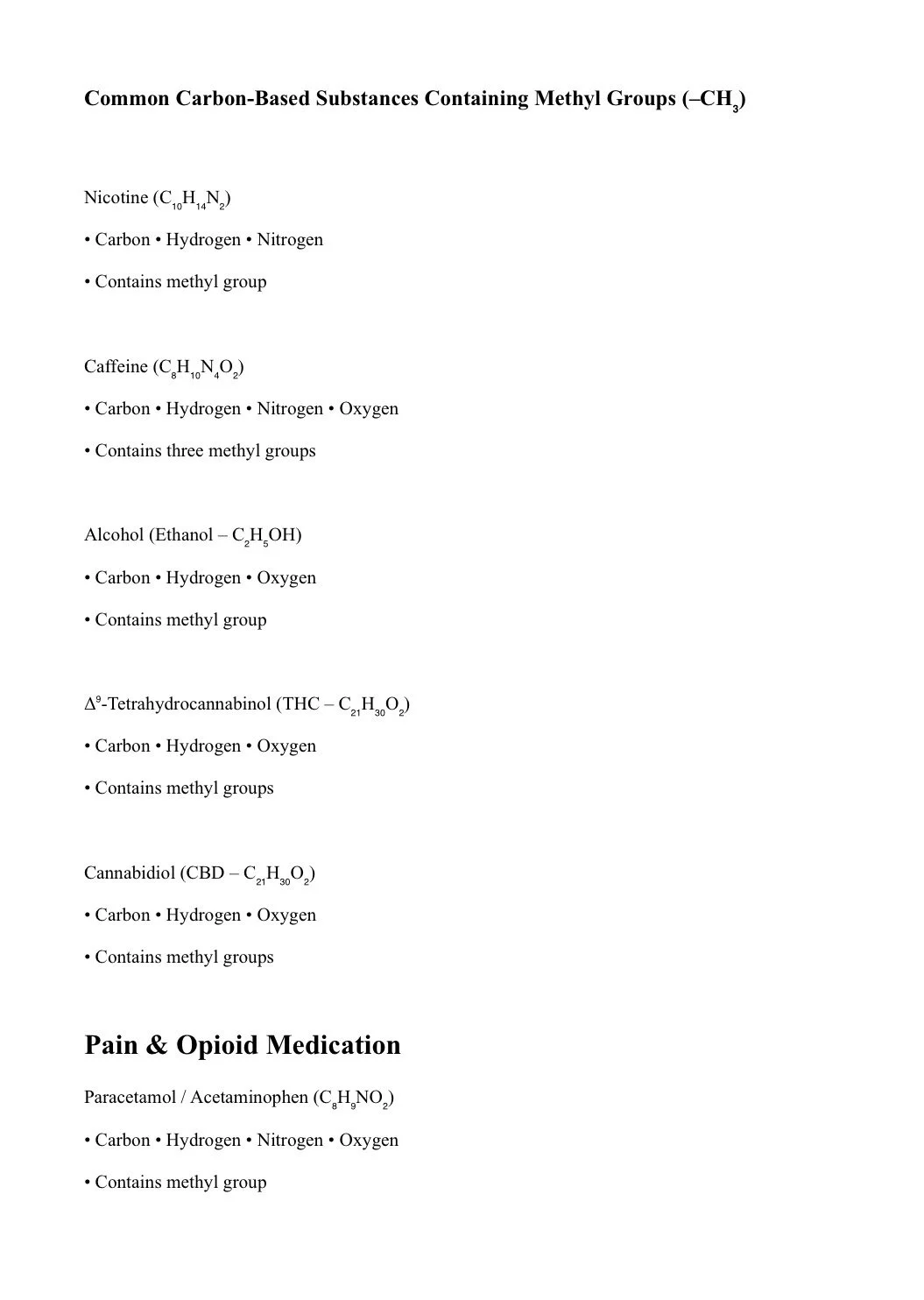
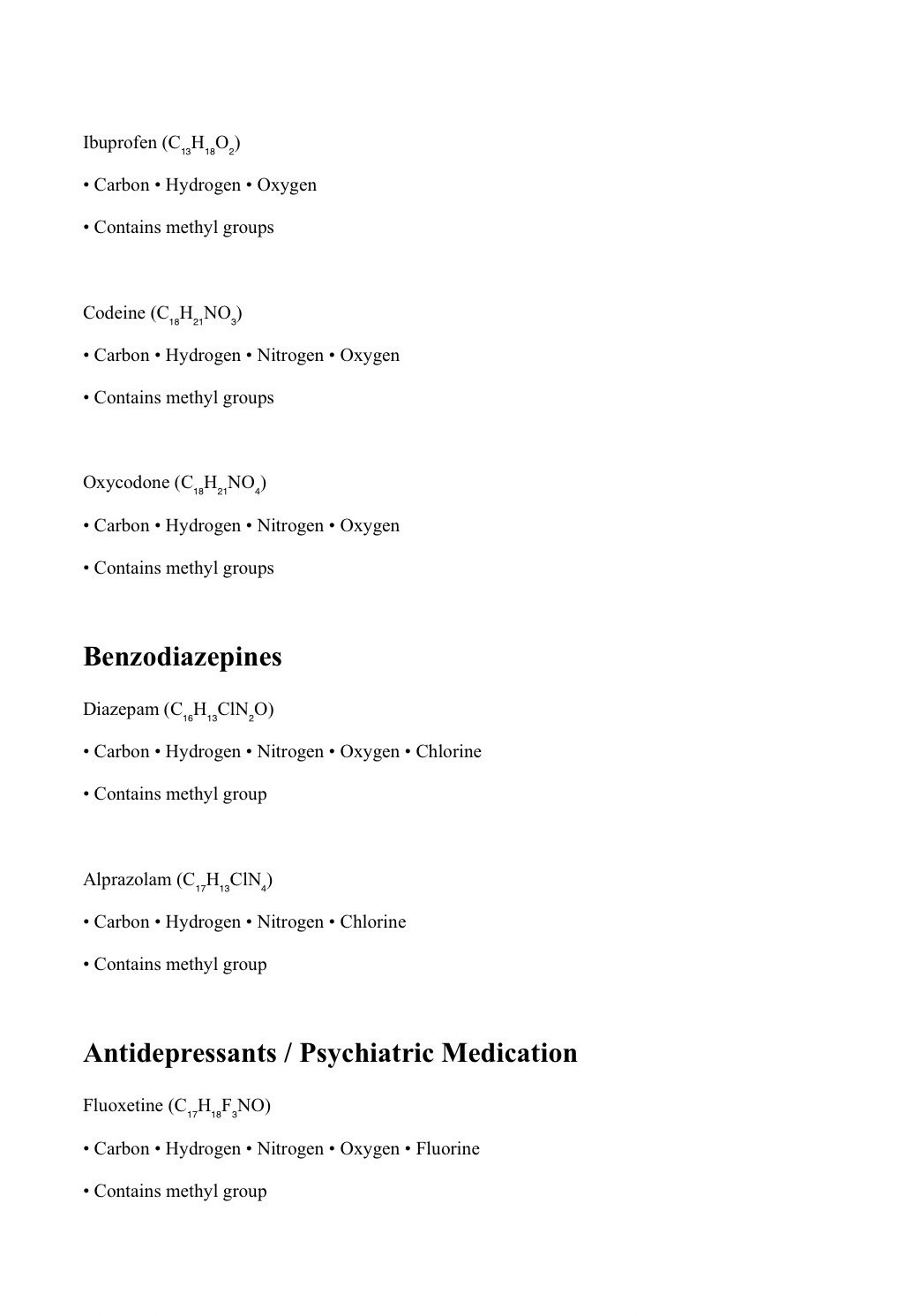
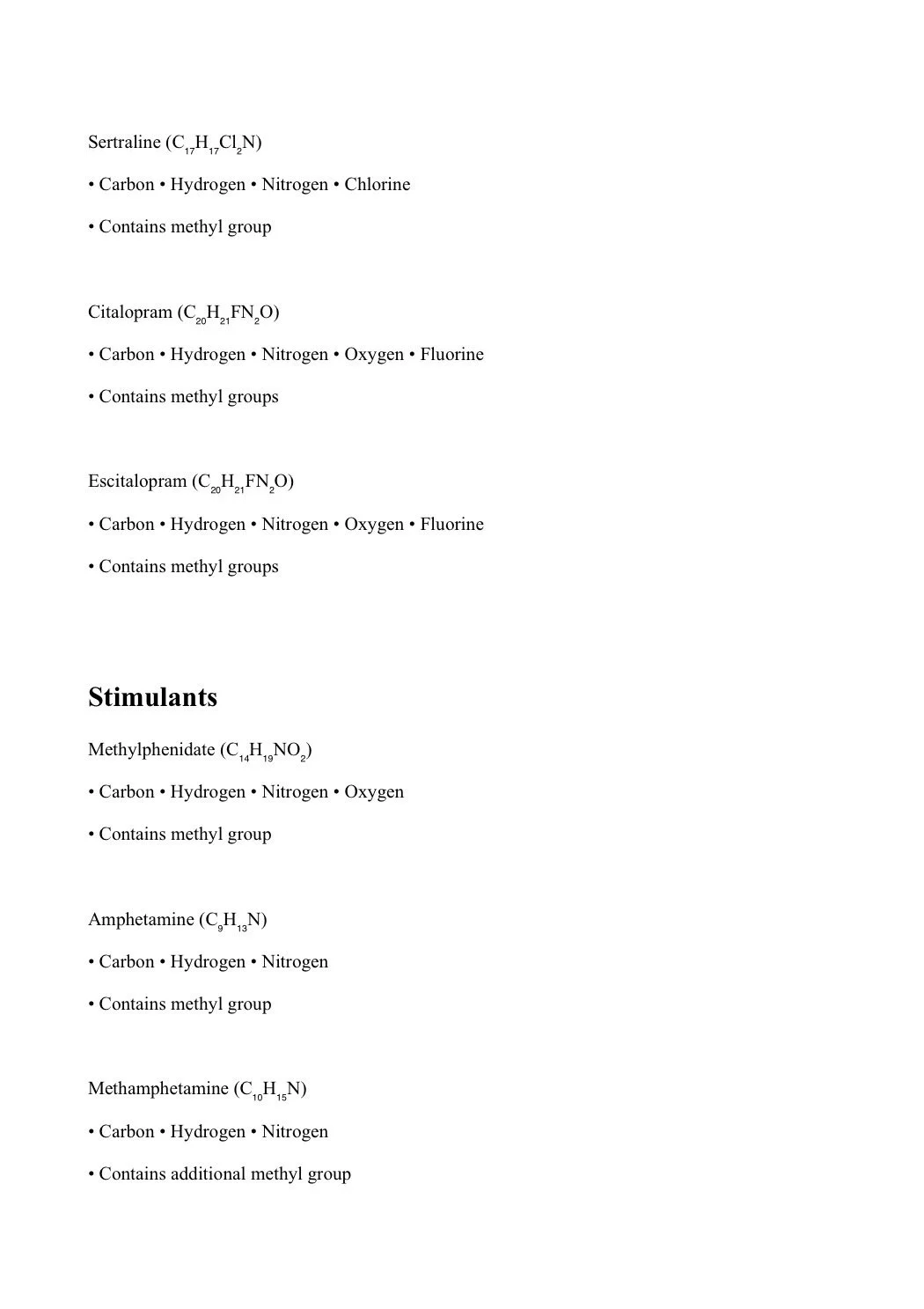
STIMULANTS WITH METHYL GROUP
Nicotine (C₁₀H₁₄N₂) • Carbon • Hydrogen • Nitrogen + Methyl group
Caffeine (C₈H₁₀N₄O₂) • Carbon • Hydrogen • Nitrogen • Oxygen + Methyl group
Alcohol (Ethanol - C₂H₅OH) • Carbon • Hydrogen • Oxygen + Methyl group
Sugar (Sucrose - C₁₂H₂₂O₁₁) • Carbon • Hydrogen • Oxygen + Methyl group
Cannabis (Tetrahydrocannabinol, THC – C₂₁H₃₀O₂) • Carbon • Hydrogen • Oxygen + Methyl group
Antidepressant (Fluoxetine – C₁₇H₁₈F₃NO) (active ingredient in Prozac) • Carbon • Hydrogen • Nitrogen • Oxygen • Fluorine + Methyl group
Morphine (C₁₇H₁₉NO₃) • Carbon • Hydrogen • Nitrogen • Oxygen + Methyl group
LSD (Lysergic acid diethylamide – C₂₀H₂₅N₃O) • Carbon • Hydrogen • Nitrogen • Oxygen + Methyl group
Sertraline (C₁₇H₁₇Cl₂N) (antidepressant, Zoloft) • Carbon • Hydrogen • Nitrogen • Chlorine + Methyl group
Cannabidiol (CBD – C₂₁H₃₀O₂) (non-psychoactive cannabis compound) • Carbon • Hydrogen • Oxygen + Methyl group
Aspirin (Acetylsalicylic Acid – C₉H₈O₄) • Carbon • Hydrogen • Oxygen + Methyl group
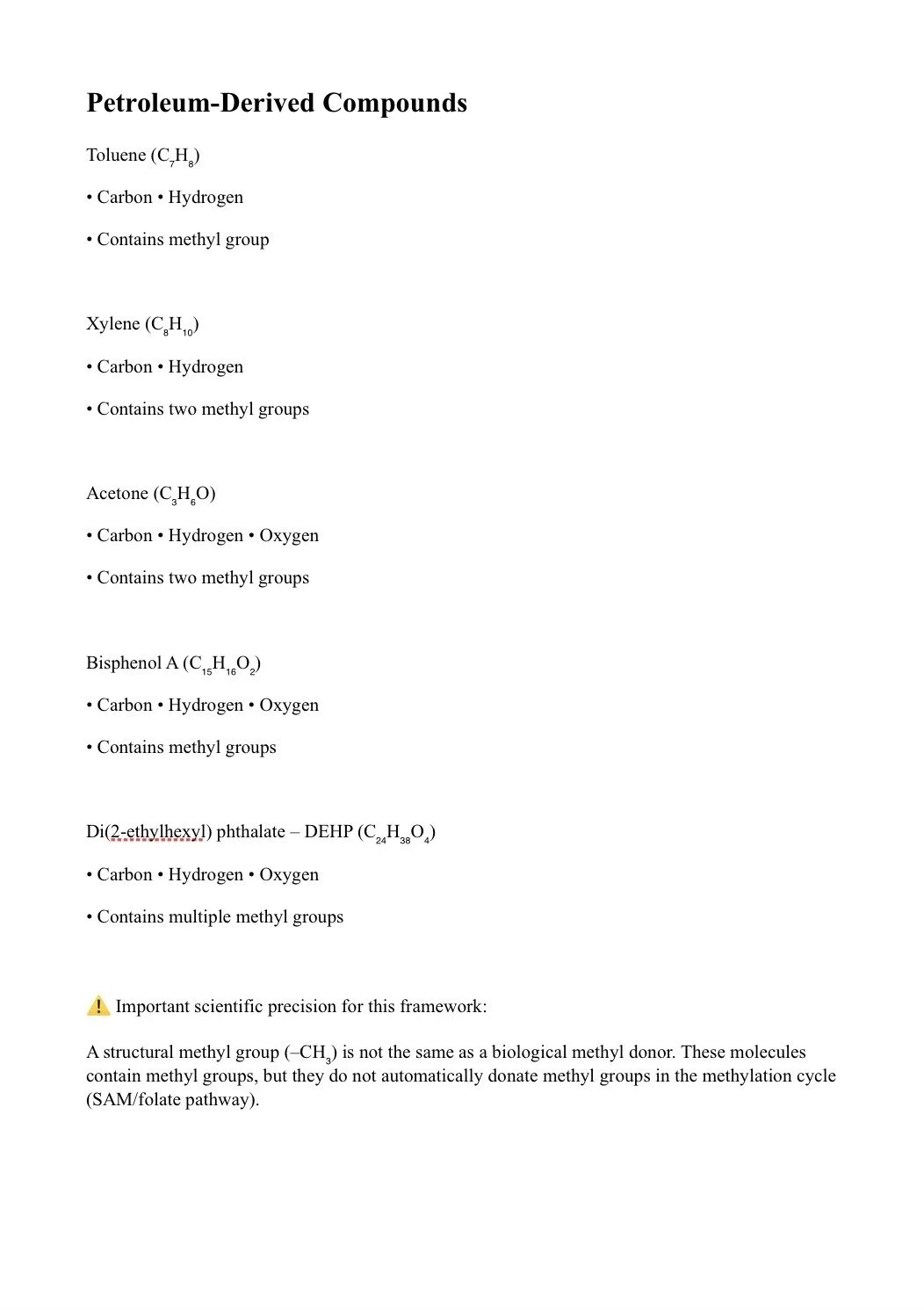
Petroleum (Crude Oil – mixture of hydrocarbons such as alkanes, cycloalkanes, and aromatics) • Carbon • Hydrogen +Methyl group
Petroleum is not a single compound but a complex blend of molecules like methane, hexane, octane, benzene, toluene, and xylene. Almost all of them contain methyl groups (–CH₃), which are a defining feature of hydrocarbons and key to their chemical reactivity and energy content.
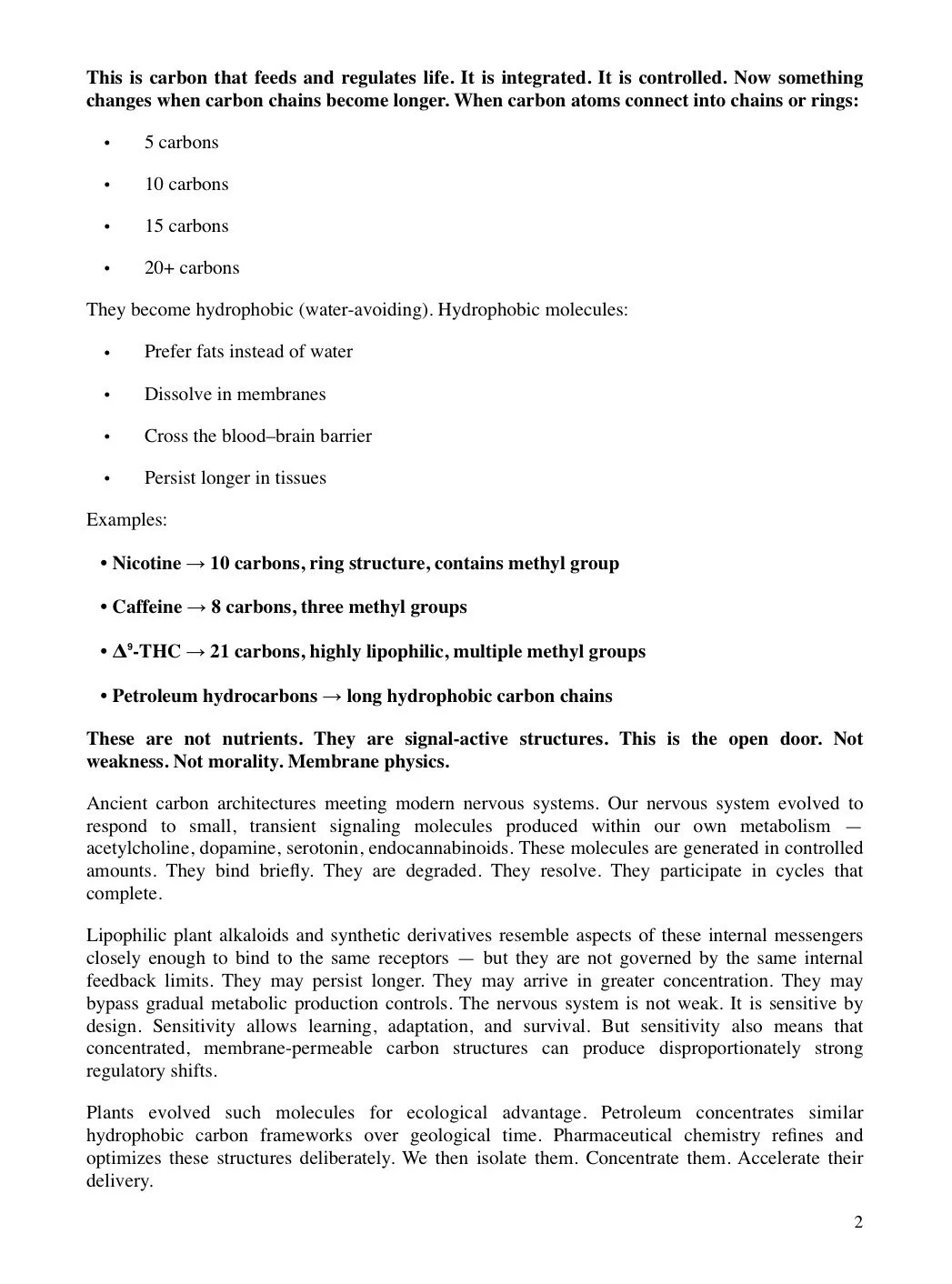
The destiny of the methyl group lies in what it binds to. When it attaches to proteins, fats, or sugars, it becomes a nutrient — sustaining coherence, memory, and polarity in living systems. But when it attaches to alkaloids, oils, or hydrocarbons, it becomes a stimulant — igniting sparks that burn out rather than nourish.
For example, nicotine is an alkaloid whose methyl groups allow it to lock into nicotinic-acetylcholine receptors, firing signals that tire the body’s circuits. Caffeine, another alkaloid, carries three methyl groups that block adenosine receptors, forcing wakefulness instead of rest. Morphine and cocaine also belong to this family — each driven by methyl attachments that amplify effect but drain coherence.
No one has previously brought these elements into a single frame. This is the contribution of the trilogy: showing that the same molecular driver that encodes memory in DNA also encodes addiction at the level of civilization.
THE SACRED ENERGY OF CHANGE AND CONTROL
The phenomenon of control through stimulation — through the molecular mechanism of methylation — is not a modern creation. It reaches back thousands of years, woven into both biology and culture. Long before industry or technology existed, life itself evolved to use methyl groups as instruments of adaptation, memory, and control. Methylation was not designed to enslave, but to stabilize. It is nature’s way of recording experience: a tiny chemical mark that tells a cell what to remember and what to forget.
In early organisms, methylation allowed survival. When exposed to stress — heat, hunger, light, or toxins — a cell could tag its DNA with methyl groups, essentially saying, “remember this condition.” These marks shaped which genes were active or silent, teaching the organism how to adapt the next time the same environment appeared. Over generations, this process formed biological memory — a molecular intelligence system that stored patterns of reaction long before nervous systems existed.
At submarine volcanoes, where iron- and sulfur-rich minerals met alkaline hydrothermal fluids and the mildly acidic early ocean, generating natural electrical gradients. These reactions did not yet make life but repeated themselves endlessly, each cycle leaving a trace, each trace building upon the last. Out of this repetition, methyl groups (–CH₃) appeared — tiny imprints of chemistry that would later serve as markers of memory.
In living systems, these same imprints became central. Proton gradients, once formed across mineral surfaces, were taken up by early cells and transformed into the universal engine of ATP synthesis. Methyl groups extended the pattern: they attached to DNA, turning genes on and off, allowing cells to “remember” and pass instructions across divisions and generations. Through the methionine cycle, where sulfur and carbon meet, they drive neurotransmitter balance, detoxification, and energy metabolism.
As humans evolved, we learned to manipulate these same biochemical pathways through plants and natural compounds. Long before modern chemistry, ancient cultures discovered substances that affected mood, focus, and awareness — all through mechanisms linked to methylation and neurotransmitter regulation. Fermented drinks containing ethanol, the cacao plant, tea, coffee, betel nut, and early forms of tobacco all act, in part, on methylation-related signaling.
When such compounds enter the body, they don’t just excite the brain — they modify the molecular balance of methyl groups that regulate dopamine, norepinephrine, and serotonin pathways. The result is a rise in stimulation and attention, a sharper sense of purpose, and often, a feeling of connection or elevation.
Stimulants look different, but chemically, they share the same spark:
THE METHYL GROUP - CH3
When societies discovered them, they expanded, accelerated, and overreached. When the supply faltered, collapse followed. This is not coincidence — it is the same memory mechanism replayed at a larger scale.
The same way that biology uses methylation to regulate memory, humans can learn to regulate civilization’s memory through addictive behaviour.
THE ANCESTRAL CHEMICAL CONDITIONS OF ADDICTION
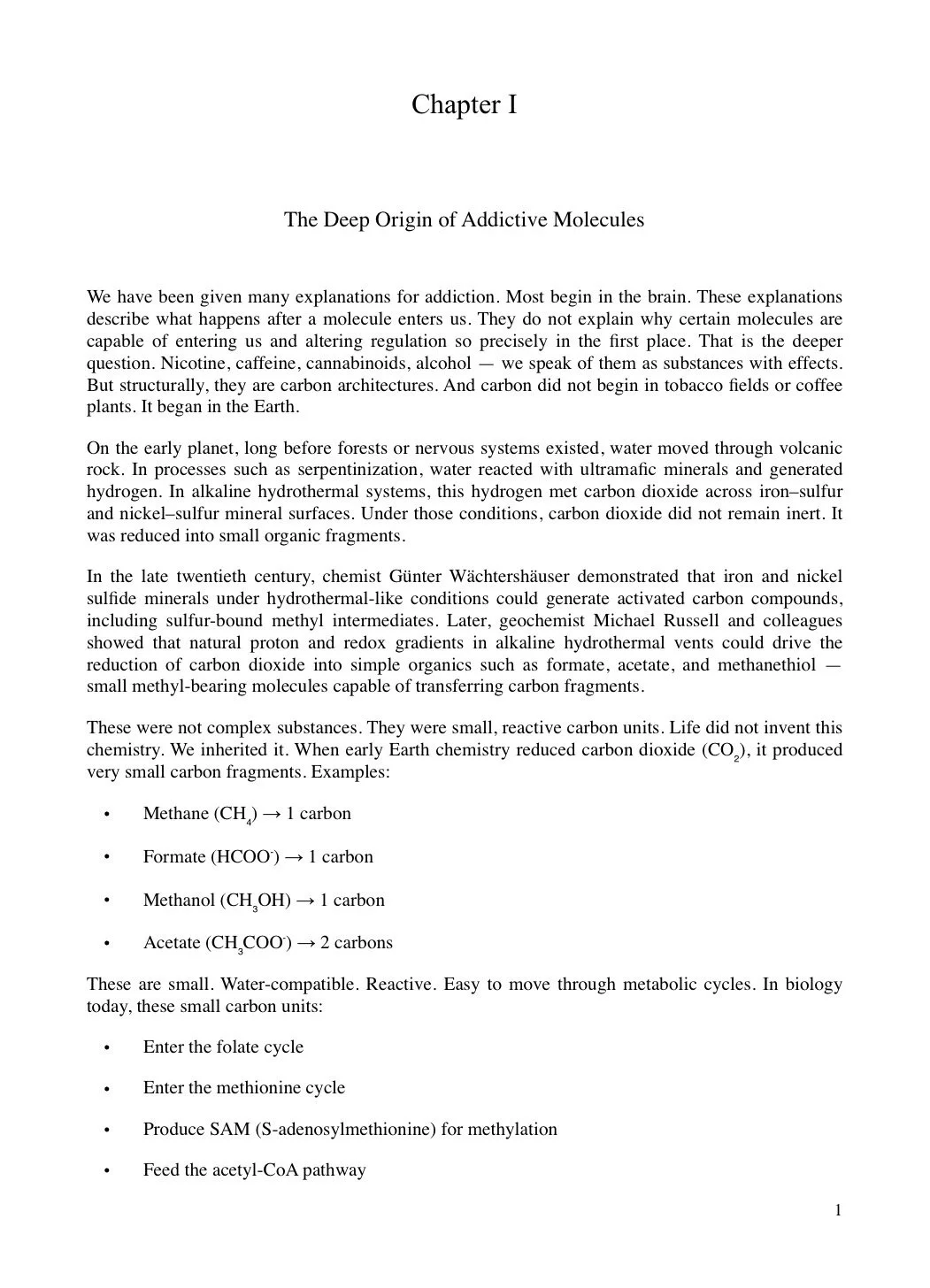
The question of how life began has drawn pioneers from chemistry and geology alike. Two researchers in particular — Günter Wächtershäuser (1938–2021), a German chemist, and Michael Russell (1939– ), a Scottish geologist — devoted their work to exploring how volcanic minerals and seawater might have generated the first steps of living chemistry.
Wächtershäuser proposed the Iron–Sulfur World hypothesis. He argued that the surfaces of iron sulfide (FeS) and nickel sulfide (NiS) minerals could act as catalysts for prebiotic reactions. In 1997, working with Claudia Huber, he published experimental evidence that such surfaces could combine carbon monoxide (CO) with methanethiol (CH₃SH). The product, as they wrote in Science:
“Activated acetic acid is produced under mild volcanic conditions by the reaction of carbon monoxide with methanethiol in the presence of NiS and FeS… The product is the thioester methyl thioacetate.” (Huber & Wächtershäuser, Science, 1997, 276:245–247)
The significance lies in the word methyl. This is not just a chemical label — it refers directly to the methyl group (–CH₃), one carbon atom bound to three hydrogens. Wächtershäuser’s experiment therefore demonstrated that under plausible early Earth conditions, methyl groups could emerge and be stabilized in the form of thioesters. He interpreted such molecules as primitive energy currencies, analogues of acetyl-CoA in modern biochemistry, and evidence for “surface metabolism” — reaction cycles catalyzed and sustained by mineral surfaces.
Michael Russell, working from a geological perspective, reached complementary insights. While studying 360-million-year-old mineral deposits in Ireland, he identified the remains of ancient hydrothermal chimneys. From this evidence he developed the Alkaline Vent Theory. Russell showed that the mixing of alkaline hydrothermal fluids with acidic seawater naturally produced pH and redox gradients across the thin walls of iron sulfide chimneys — in effect, natural proton-motive forces. As Russell and colleagues later summarized:
“The alkaline vent hypothesis proposes that life emerged from redox and pH disequilibria across thin FeS walls that functioned as inorganic membranes… These structures are seen as natural electrochemical reactors capable of driving carbon reduction.” (Russell et al., Philosophical Transactions of the Royal Society B, 2010)
Russell showed how geological structures — alkaline hydrothermal chimneys — could generate and sustain natural energy gradients across thin FeS walls. These gradients would have provided the energetic conditions necessary for prebiotic chemistry to persist.
Taken together, the work of Wächtershäuser and Russell points to a profound insight: the earliest conditions of life were organized by iron–sulfur minerals, electrolytes, and methyl chemistry.
WHAT IS THE INDUSTRIAL METHYLATION?
The original methylation system — both biological and cultural — was adaptive. It created cycles of activation and rest, memory and renewal. But as civilizations industrialized, the rhythm was broken. Stimulation became continuous. Artificial light, constant noise, caffeine, nicotine, cannabis, petroleum additives, and digital feedback loops all overstimulate the same neural circuits that methylation evolved to regulate.
Where ancient rituals once gave the nervous system time to reset, the modern environment floods it endlessly. The result is biochemical rigidity — the methylation system begins to reinforce the same neural patterns over and over, converting flexibility into fixation. What was once a mechanism for survival becomes a mechanism for control. The chemistry of repetition turns into the economy of repetition — consumption, production, and behavior all governed by the same loop of stimulation and response.
Where nature uses methylation with precision, timing, and balance. Industry uses it to create power, profit, and dependency. It’s like taking the sacred spark — and turning it into a floodlight aimed at your nervous system.
Where Did It Start?
Late 1800s – Early 1900s
Scientists first discovered methyl groups in natural compounds like caffeine, cacao, cannabis and nicotine. Early chemists learned to methylate substances to increase their effects. This began with medicines and dyes, but quickly moved to stimulants.
Mid-20th Century
Pharmaceutical companies began engineering methylated drugs:
❍ Methylphenidate (Ritalin)
❍ Methamphetamine (crystal meth)
❍ Methylated opioids, antidepressants, anesthetics
Why Was Methylation Industrialized?
Because the methyl group is hyper-efficient:
❍ It changes molecular structure with just one carbon.
❍ It crosses the blood-brain barrier, making substances more psychoactive.
❍ It increases lipid solubility, allowing drugs to move faster and deeper.
❍ It stabilizes molecules, making products last longer on shelves.
In short: Methylation amplifies impact. It became a tool for designing maximum stimulation with minimum material. And what do industries want?
More stimulation = more consumption.
What’s the Impact on Humans?
🔺Overstimulation of the Nervous System
Methylated drugs and additives over-activate dopamine, adrenaline, and serotonin pathways. This leads to chronic stress, anxiety, burnout, and numbness. The brain adapts by desensitizing, causing people to seek stronger stimulation.
It becomes a vicious cycle:
stimulate → adapt → crave more → repeat stimulation
🔺 Addiction by Design
Methylation increases the binding strength of substances to receptors in the brain. This makes methylated compounds harder to quit, even if the original molecule was mild. The food, pharma, and substance industries used this to engineer hyper-addictive products.
🔺 Hormonal and Immune Disruption
Synthetic methyl compounds interfere with:
❍ Estrogen metabolism
❍ Histamine clearance
❍ Liver detox enzymes
The result is more chronic pain.
🔺 Cultural Homogenization
Wherever industrial methylated products go, they bring the same vicious cycle:
❍ Sugar + caffeine = stimulation
❍ Processed food = fatigue + craving
❍ Pharma = symptom management
❍ Stimulants = temporary identity
Global cultures are becoming chemically unified — not by language or politics, but by methylated consumption loops.
What’s the Bigger Pattern?
Nature used methylation to:
❍ Adapt
❍ Remember
❍ Regulate
But industrial systems use it to:
❍ Stimulate
❍ Sell
❍ Dominate
Our civilization replaced the wisdom of biochemical memory with the illusion of permanent activation. We no longer remember — we just react.
THE METHYL MEMORY: HOW CHEMISTRY CHOOSES US
The methyl group (–CH₃) is not only a fragment of chemistry — it is a unit of repetition. Its bonds are stable, its reactions predictable, and its placement can switch molecules on or off without destroying them. This stability allows methyl marks on DNA to endure through cell divisions, passing information across generations. It is not only genes that we inherit, but the methyl imprints that decide which genes wake and which remain silent (Bird, 2002).
Because of this, our lives are not built solely on choice. The methyl group is the unseen chooser. It engraves patterns into biology, making them repeat whether we wish it or not. Epigenetic methylation of stress and trauma has been shown to persist across generations (Dias & Ressler, 2014).
Addictive behaviour is one of the clearest examples: the repeated imprint of stimulation and preservation. Methylation of dopamine-related genes and the methylation of neurotransmitters by enzymes such as COMT link methyl chemistry directly to reward and addiction pathways (Nugent et al., 2019; Lachman et al., 1996).
So the methyl group does not just power our metabolism — it remembers us. It holds the echo of past choices and carries them forward. Each time we reach for “something new” — a drug, a stimulant, a synthetic material — we are not inventing novelty.
Medicinal chemistry shows how powerful this repeating unit is: a single added methyl group — the so-called “magic methyl effect” — can radically change a drug’s potency and profile (Schonherr & Cernak, 2013). The “magic methyl” effect is a well-established concept in medicinal chemistry, referring to the disproportionate impact that the introduction of a single methyl (–CH₃) substituent can have on a compound’s pharmacological profile. Strategic methylation can significantly alter binding affinity, metabolic stability, lipophilicity, membrane permeability, and target selectivity, thereby enhancing potency, duration of action, and overall drug performance.
Simvastatin – A widely-used cholesterol-lowering statin; its methyl substitution contributes to potency and pharmacokinetics.
Celecoxib – A commonly prescribed COX-2 inhibitor (anti-inflammatory pain relief) that has a methyl ring substitution improving target‐selectivity.
Olanzapine – A frequently used antipsychotic in psychiatry; methyl groups help optimize its lipophilicity and metabolic profile.
From the first sparks of geochemistry to the design of today’s medicines, the methyl group has carried the same logic of repetition: it does not merely provide energy or switch a pathway on and off — it encodes memory. It is the echo of past choices written into matter itself, resurfacing in addictions, in technologies, and in life’s preservation.
*The origin is usually not from plant leaves, but from chemical synthesis via industrial methylation processes.
WHAT IS THE NATURAL METHYLATION?
Methylation was not designed to enslave, but to stabilize. It is nature’s way of recording experience: a tiny chemical mark that tells a cell what to remember and what to forget.
In early organisms, methylation allowed survival. When exposed to stress — heat, hunger, light, or toxins — a cell could tag its DNA with methyl groups, essentially saying, “remember this condition.” These marks shaped which genes were active or silent, teaching the organism how to adapt the next time the same environment appeared. Over generations, this process formed biological memory — a molecular intelligence system that stored patterns of reaction long before nervous systems existed.
Natural methylation is the process by which your body adds a methyl group (CH₃) to other molecules— especially DNA, proteins, neurotransmitters, and hormones. The act of adding one carbon and three hydrogen atoms— changes the behavior of the molecule it attaches to. Methylation doesn’t build new structures. It modifies what already exists. It’s how the body chooses what to express, what to hide, what to detox, what to activate.
It is, in essence, the “epigenetic control system” of life.
What Does Methylation Do in the Body?
Gene Regulation (Epigenetics): Methylation determines which genes are expressed—not by changing your DNA code, but by tagging it. When a methyl group is added to a DNA site, the gene is often silenced. This is how your cells remember their identity—why a liver cell stays a liver cell, even though it contains the same DNA as a brain cell. This is also how your body adapts to trauma, stress, toxins, and experience. Your life story can be written into your cells via methylation.
Neurochemicals like dopamine, serotonin, epinephrine, and histamine are processed and broken down via methylation. If methylation is too fast, you may feel flat, foggy, or anxious. If it’s too slow, you may feel overstimulated, aggressive, or unable to calm down.
Methylation is the body’s volume control for emotion.
How Does the Body Perform Methylation?
To add a methyl group (CH₃) to any molecule, the body uses a methyl donor— a molecule that carries and transfers the CH₃ group. The main carrier is: SAMe (Sulfur- adenosylmethionine) — the body’s universal methyl donor. SAMe is synthesized from the amino acid methionine, using energy from ATP, and relies on many key nutrients to function.
What Does Methylation Require? (The Natural Cofactors)
The body cannot methylate without supporting nutrients. These include:
❍ Folate (Vitamin B9) – in its active form methylfolate, it’s essential for building SAMe.
❍ Vitamin B12 (methylcobalamin) – needed to transfer the CH₃ group into the methylation cycle.
❍ Vitamin B6 (pyridoxal-5-phosphate) – assists in converting homocysteine to methionine.
❍ Choline – an alternative methyl donor, also essential for brain development and fat metabolism.
❍ Betaine (Trimethylglycine) – supports the remethylation of homocysteine.
❍ Manganese and Zinc – necessary for enzyme activity.
❍ Methionine – an amino acid that starts the methylation cycle.